Speak With Us

AI Automation

AI automation for service businesses, built for real ROI.

AI for the work your team still does by hand: reading documents, sorting intake, answering client questions, flagging accounts, enriching leads. We fix the data first, then add the AI.

Speak With Us
AI automation for service businesses, built for real ROI.

What we automate

Automation that runs on a clean foundation

Workflow Automation
01

Workflow Automation

We automate the repetitive, multi-step work your team does by hand: moving data between apps, sending the follow-up, updating the record, kicking off the next task. Built on n8n, Make, Zapier, Airtable, and Softr.

The busywork runs on its own, so your team spends its hours on the work that actually needs a person.

AI Workflows
02

AI Workflows

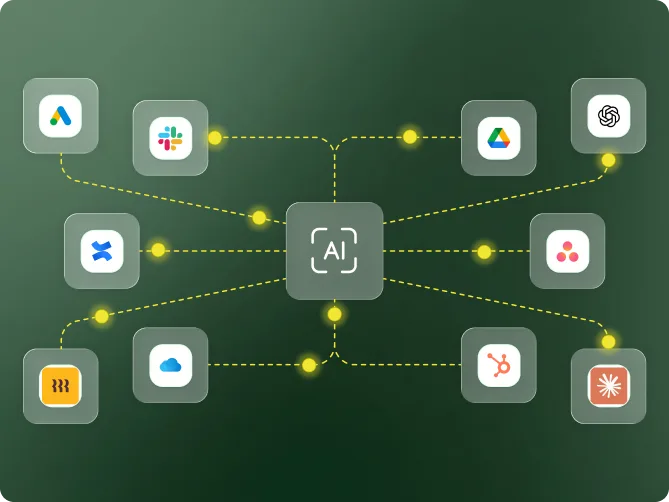
We put AI inside those automations at the points that used to need judgment: pulling fields out of messy documents, sorting incoming email, drafting the first version, deciding where something goes next.

AI does the reading and the sorting; your team makes the calls.

Integrations
03

Integrations

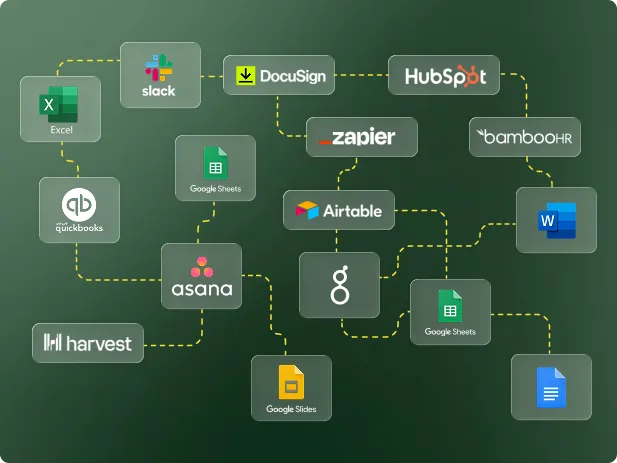
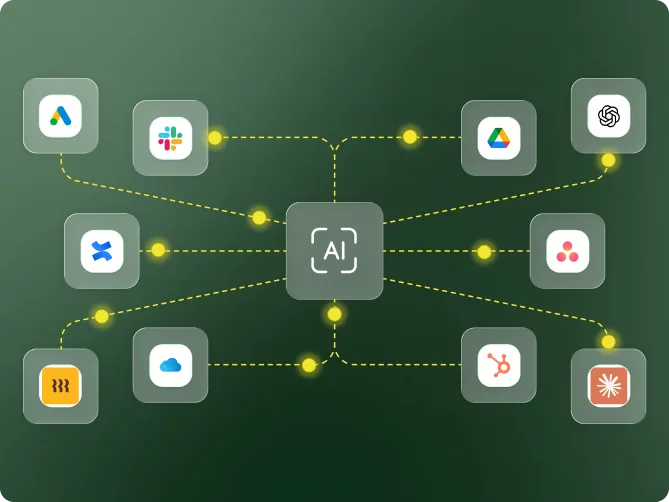
We connect the tools you already pay for, from HubSpot to DocuSign to your accounting software, so they talk to each other and to your business operating system instead of living in separate silos.

Your data moves between tools on its own.

Key takeaways

  • Catalytics Automation builds AI automation for service businesses, working from the business’s own records and connected through tools like Make and n8n.
  • The AI features we run in production for clients are document field extraction, AI intake forms, risk analysis, chatbots, FAQ chatbots, client health status alerting and lead enrichment.
  • At Cirrus Capital, a RAG chatbot qualifies website visitors and shows them a shortlist of matched investors inside the chat.
  • We build the data layer before adding AI, because AI acts on whatever records it is given.

What do AI automation agencies do?

An AI automation agency builds software that makes the routine judgment calls a team used to make by hand, like which record a document belongs to or which lead is worth a call. We do this for service businesses, and we build it into the system the business runs on, often Airtable connected through Make or n8n.

The work starts with the operation rather than the model. We map where the hours go, then put AI at the steps where a person reads, sorts or decides.

How can I automate my business using AI?

Start with the work your team repeats every day and still has to think about, the PDF someone copies into the database field by field or the question someone answers for the tenth time. Each AI feature we run in production for clients takes over one of those steps, and each one works from the business's own records.

AI featureWhat it does
Document field extractionReads incoming documents and writes each field into the database, so nobody retypes it.
AI intake formsProcesses what a new client submits, so the request lands in the system complete and sorted.
Risk analysisReviews records and flags the ones a person should check first.
ChatbotsHold a conversation with a website visitor, qualify the request and route it into the CRM. Cirrus Capital runs one.
FAQ chatbotsAnswer common questions from the business's own documents, at any hour.
Client health status alertingWatches each client account and alerts the team when its status changes.
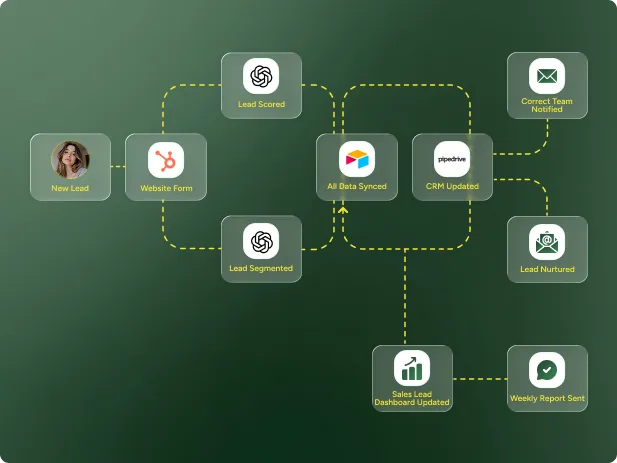
Lead enrichmentFills in missing details on a new lead before anyone follows up.

What does AI automation look like in a real business?

At Cirrus Capital, a Florida debt capital advisor, website visitors now talk to a RAG chatbot, one that answers from Cirrus’s own investor and deal knowledge, instead of filling in a contact form. It asks the qualifying questions, filters the investor database while the conversation runs, and shows the company a ranked shortlist of matched investors before the chat ends.

The opportunity then enters the CRM already qualified and matched, and the introduction emails go out on their own. Underneath the chatbot sits a custom CRM with separate databases for companies, investors and partners, and a matching algorithm that reruns whenever either side changes.

“Our work with Catalytics will enable us to reach our 2024 and 2025 revenue and growth targets with 30–40% less headcount than anticipated.”

Ryan Ridgway, CEO, Cirrus Capital

Read the Cirrus Capital case study.

Why does AI need clean data first?

AI automation reads records and acts on them, so it inherits every gap in those records. When client data is split across several tools, a chatbot can answer from stale facts and an alert can fire on the wrong account. We build the data layer first and add the AI on top of it.

Cirrus Capital followed that order: the companies, investors and partners databases came first, the automated workflows next, and the chatbot last.
The business operating system

Three layers that run your business.

Every system is built on the same foundation, and each layer depends on the one below it.

1

Operations Consulting

We map how your business really works and document the processes your team and your tools can both follow.

Explore Operations Consulting →
2

Business Operating System

One system your whole team runs on: the custom tools, connected data, and automations that replace the manual work.

Explore Business Operating Systems →
3

AI Automations

Intelligence that works because it has something clean to operate on. Workflow automation and AI layered on everything below.

How it works

Map. Build. Launch. Optimize.

  1. 01

    We map your operations

    A few working sessions and access to your tools. We document how your business actually runs today, not how the org chart says it does.

  2. 02

    We build your system

    We design and build your operating system layer by layer, reviewing with you as we go. Nothing gets built that you haven’t seen.

  3. 03

    Your team runs on it

    We hand it over and train your people.

  4. 04

    We stay on and optimize

    We can stay on as your system administrators, watch how it runs day to day, and keep improving it as your business grows and changes.

FAQ

Questions about AI automation

What tools do you build automations with?

We build automations with Make, n8n, and Zapier, and for the steps that need AI we use Anthropic's Claude and OpenAI's GPT models, chosen by task. When a client's workflows lean heavily on AI, we usually move them from Make to n8n. For anything custom we write it in Python. We pick the tool that fits the job, not the one that's trending.

What's the difference between automation and AI automation?

Plain automation follows fixed rules: when this happens, do that. AI automation adds judgment to the steps that used to need a person, like reading a document, sorting a request, or drafting a reply. Most systems we build use both, rules for the predictable parts and AI for the fuzzy ones.

Is AI automation worth it for a small service business?

It is when it takes over work your team does over and over, like pulling details out of documents, answering the same client questions or chasing leads with missing details. It isn't when the data underneath is scattered, because AI then works from records nobody trusts. That's why we look at the data before we suggest any AI.

Do you build AI marketing automations?

Not anymore. Our AI work now centers on operations: the documents, intake, client accounts and leads a service business runs on.

How long until we see results?

Simple automations, like a hand-off between two tools or an AI-drafted summary, go live quickly; builds that span several tools are a bigger project with a timeline we define at scoping. Either way we ship the highest-value automations first, so you feel it before the whole thing is done.

Let’s get to work

Ready to build your business operating system?

Right now your business runs on a stack of tools that don’t talk to each other. That’s the problem we solve. Tell us what’s slowing you down and we’ll show you what one system would look like for your firm.